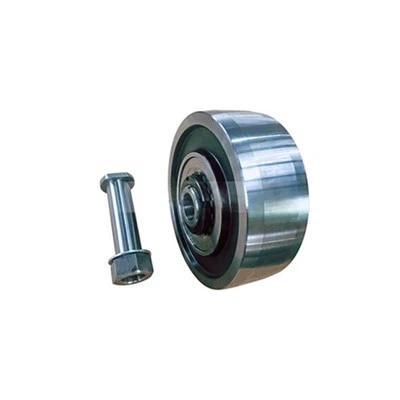
When it comes to the components of a mixer drum, the track ring plays a crucial role. It is responsible for ensuring the smooth rotation of the drum, which is essential for the proper mixing of concrete. There are two main methods of manufacturing mixer drum track rings: forging and casting. As a Mixer Drum Forged Track Ring supplier, I've witnessed firsthand the unique characteristics and differences between these two types of track rings. In this blog, I'll delve into the details of forged and cast mixer drum track rings, highlighting their differences and helping you make an informed decision when choosing the right one for your mixer truck.
Manufacturing Process
The manufacturing process is the fundamental difference between forged and cast mixer drum track rings. Casting is a process where molten metal is poured into a mold and allowed to solidify. This method is relatively simple and cost - effective, making it a popular choice for many manufacturers. The mold can be designed to create complex shapes, which gives casting an advantage in terms of design flexibility.
On the other hand, forging is a more labor - intensive process. It involves heating a metal billet to a high temperature and then using compressive forces, typically from a hammer or a press, to shape the metal into the desired form. Forging can be further classified into open - die forging and closed - die forging. In open - die forging, the metal is shaped between flat or simple dies, while in closed - die forging, the metal is forced into a die cavity with the exact shape of the final product.
Material Structure
The material structure of forged and cast track rings is significantly different. Cast track rings have a grain structure that is formed during the solidification process. This structure can sometimes result in porosity, inclusions, and uneven grain size. These imperfections can weaken the material and reduce its overall strength and durability.
Forged track rings, however, have a refined and continuous grain structure. The compressive forces applied during forging align the grains in the direction of the force, which enhances the material's strength and toughness. This results in a track ring that is less likely to crack or break under stress, making it a more reliable option for heavy - duty applications such as mixer drums.


Mechanical Properties
In terms of mechanical properties, forged mixer drum track rings outperform cast track rings in several aspects. Forged track rings have higher tensile strength, yield strength, and impact resistance. Tensile strength refers to the maximum amount of stress a material can withstand before breaking under tension. Yield strength is the stress at which a material begins to deform plastically. Impact resistance is the ability of a material to absorb energy when subjected to a sudden impact.
The high strength and toughness of forged track rings make them better suited for the harsh operating conditions of mixer drums. Mixer drums are constantly subjected to heavy loads, vibrations, and impacts during the mixing and transportation of concrete. A forged track ring can withstand these stresses without failing, ensuring the long - term reliability of the mixer drum.
Cast track rings, while they can be designed to meet certain strength requirements, generally have lower mechanical properties compared to forged track rings. The porosity and inclusions in the cast material can act as stress concentrators, increasing the likelihood of failure under high - stress conditions.
Surface Finish and Precision
Surface finish and precision are important factors in the performance of mixer drum track rings. Forged track rings typically have a better surface finish and higher dimensional accuracy. The forging process can produce a smooth surface with tight tolerances, which is beneficial for the smooth rotation of the mixer drum. A precise track ring ensures that the drum rotates evenly, reducing wear and tear on other components of the mixer truck.
Cast track rings may have a rougher surface finish due to the nature of the casting process. The molten metal may not fill the mold completely, resulting in surface defects such as bumps and voids. Additionally, the dimensional accuracy of cast track rings can be more difficult to control, which may require additional machining to achieve the desired specifications.
Cost Considerations
Cost is always an important factor when choosing between forged and cast mixer drum track rings. Casting is generally a more cost - effective manufacturing method compared to forging. The equipment and tooling required for casting are less expensive, and the process is faster, allowing for higher production volumes at a lower cost per unit.
However, it's important to consider the long - term costs. While cast track rings may be cheaper upfront, they may require more frequent replacement due to their lower strength and durability. Forged track rings, although more expensive initially, can provide a longer service life and reduce the overall cost of ownership in the long run.
Applications
The choice between forged and cast mixer drum track rings also depends on the specific application. For light - duty mixer trucks or applications where cost is a major concern, cast track rings may be a suitable option. They can provide adequate performance for less demanding operations.
For heavy - duty mixer trucks that are used in large - scale construction projects or in harsh environments, forged track rings are the preferred choice. Their high strength and durability ensure reliable operation under extreme conditions, reducing the risk of downtime and costly repairs.
Conclusion
In conclusion, the differences between forged and cast mixer drum track rings are significant. Forged track rings offer superior material structure, mechanical properties, surface finish, and precision compared to cast track rings. While cast track rings may be more cost - effective in the short term, forged track rings provide better long - term value and reliability.
As a Mixer Drum Forged Track Ring supplier, I am committed to providing high - quality track rings that meet the demanding requirements of the mixer truck industry. If you are in the market for a mixer drum track ring, I encourage you to consider the benefits of forged track rings. You can explore our product range by visiting Mixer Drum Forged Track Ring. We also offer other related parts such as Main Chute McNeilus MTM 440.152625 and Liebherr Mixer Control Cables.
If you have any questions or would like to discuss your specific requirements, please feel free to reach out to us. We are here to help you make the best choice for your mixer truck.
References
- ASM Handbook Committee. (2008). ASM Handbook Volume 14A: Metalworking: Forging. ASM International.
- Campbell, J. (2003). Castings. Butterworth - Heinemann.
- Kalpakjian, S., & Schmid, S. R. (2013). Manufacturing Engineering and Technology. Pearson.