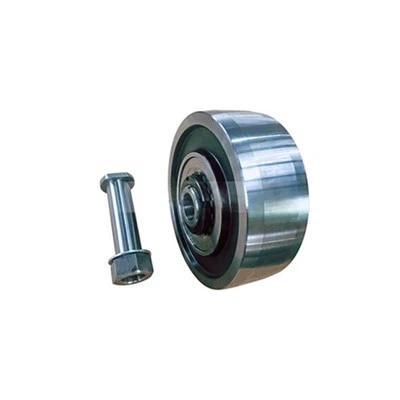
As a trusted supplier of Housing Lining Kidney Plates, I understand the critical importance of ensuring the integrity of these components. Housing lining kidney plates play a vital role in various industrial applications, especially in concrete pumping systems where they are subjected to high pressure, abrasion, and wear. Testing the integrity of these plates is essential to guarantee their performance, reliability, and longevity. In this blog post, I will discuss several effective ways to test the integrity of housing lining kidney plates.
Visual Inspection
Visual inspection is the most basic yet crucial method for testing the integrity of housing lining kidney plates. This process involves a thorough examination of the plate's surface for any visible signs of damage, such as cracks, chips, or excessive wear. A magnifying glass or a borescope can be used to detect small defects that may not be visible to the naked eye.
During the visual inspection, pay close attention to the edges and corners of the plate, as these areas are more prone to damage. Look for any signs of deformation, such as warping or bending, which can indicate structural weakness. Additionally, check the surface finish of the plate for any irregularities or rough spots, as these can affect the plate's performance and lead to premature failure.
Dimensional Measurement
Accurate dimensional measurement is essential to ensure that the housing lining kidney plate meets the required specifications. Any deviation from the specified dimensions can affect the plate's fit and function, leading to potential problems in the system.


Use precision measuring tools, such as calipers, micrometers, or coordinate measuring machines (CMMs), to measure the key dimensions of the plate, including its length, width, thickness, and diameter. Compare the measured values with the design specifications to identify any discrepancies. If the dimensions are out of tolerance, the plate may need to be reworked or replaced.
Hardness Testing
Hardness is an important property of housing lining kidney plates, as it determines the plate's resistance to wear and abrasion. Hardness testing can help identify any potential issues with the plate's material quality or heat treatment process.
There are several methods for hardness testing, including the Rockwell, Brinell, and Vickers hardness tests. Each method has its own advantages and limitations, and the choice of method depends on the material and the size of the plate. For example, the Rockwell hardness test is commonly used for metals and is relatively quick and easy to perform, while the Brinell hardness test is more suitable for larger and thicker materials.
Ultrasonic Testing
Ultrasonic testing is a non-destructive testing method that uses high-frequency sound waves to detect internal defects in the housing lining kidney plate. This method is particularly useful for detecting cracks, voids, or inclusions that may not be visible on the surface.
During ultrasonic testing, a transducer is placed on the surface of the plate, and high-frequency sound waves are sent into the material. The sound waves are reflected back from any internal defects, and the reflected waves are detected by the transducer. By analyzing the characteristics of the reflected waves, such as their amplitude and time of flight, it is possible to determine the location, size, and shape of the defects.
X-ray Testing
X-ray testing is another non-destructive testing method that can be used to detect internal defects in the housing lining kidney plate. This method uses X-rays to penetrate the material and create an image of the internal structure.
X-ray testing is particularly useful for detecting defects in complex or thick materials, where ultrasonic testing may not be effective. However, X-ray testing requires specialized equipment and trained personnel, and it can be more expensive and time-consuming than other testing methods.
Pressure Testing
Pressure testing is a method used to test the integrity of the housing lining kidney plate under pressure. This method is particularly important for applications where the plate is subjected to high pressure, such as in concrete pumping systems.
During pressure testing, the plate is installed in a test fixture and subjected to a specified pressure for a certain period of time. The pressure is gradually increased to the maximum operating pressure of the system, and any leaks or failures are detected. Pressure testing can help identify any weaknesses or defects in the plate's structure or sealing surfaces.
Wear Testing
Wear testing is a method used to evaluate the wear resistance of the housing lining kidney plate. This method is particularly important for applications where the plate is subjected to abrasion or sliding contact, such as in concrete pumping systems.
There are several methods for wear testing, including the pin-on-disk test, the block-on-ring test, and the sand abrasion test. Each method has its own advantages and limitations, and the choice of method depends on the type of wear mechanism and the application.
Conclusion
Testing the integrity of housing lining kidney plates is essential to ensure their performance, reliability, and longevity. By using a combination of visual inspection, dimensional measurement, hardness testing, non-destructive testing methods, pressure testing, and wear testing, it is possible to detect any potential issues with the plate and take appropriate measures to address them.
As a supplier of Housing Lining Kidney Plates, we are committed to providing high-quality products that meet the strictest industry standards. We use advanced testing equipment and techniques to ensure the integrity of our products, and we offer a comprehensive range of testing services to our customers.
If you are interested in purchasing Housing Lining Kidney Plates or need more information about our testing services, please contact us for a consultation. We look forward to working with you to meet your specific needs.
References
- ASME Boiler and Pressure Vessel Code, Section V - Nondestructive Examination
- ASTM International Standards for Non-Destructive Testing
- ISO Standards for Quality Management Systems
- Machinery's Handbook, 31st Edition
For more information on related products, you can check out the following links: